More Than a Certificate: Why ISO Certification Matters at O’Brien Facilities
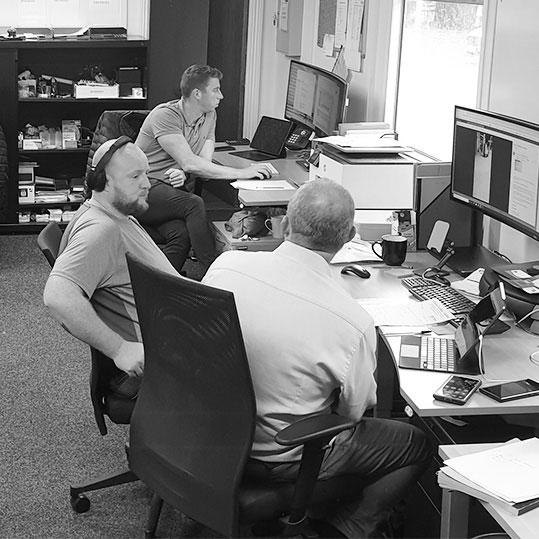
This week at the O’Brien Facilities office, we’ve been undergoing an ISO audit — an important part of maintaining the standards and management systems that support how we operate as a business.
For us, ISO certification is about much more than having a certificate on the wall. It represents an ongoing commitment to following structured processes, reviewing how we work, and continually looking for opportunities to improve.
With our own ISO audit taking place this week, we thought it was a good opportunity to look beyond the certification itself and talk about what ISO actually is, what happens during an audit, and why ISO certification should matter to businesses choosing us as a trusted partner.
What is ISO Certification?
International Organisation for Standardisation, more commonly known as ISO, is an independent, non-governmental, international organisation recognised for developing standards that businesses and organisations can use to improve quality, safety, efficiency and management systems.
Today, ISO has members representing 176 countries and has published more than 26,000 International Standards. These cover everything from information security and manufacturing to healthcare, environmental management and occupational health and safety. Rather than directly creating laws, ISO publishes voluntary standards for organisations and governments to adopt in order to improve internal systems and establish common, international expectations.
The organisation is widely known for publishing highly adopted standards, some you may recognise:
- ISO 9001 — quality management systems
- ISO 14001 — environmental management systems
- ISO/IEC 27001 — information security management
- ISO 45001 — occupational health and safety management
- ISO 8601 — standardised date and time formats
There’s also an important distinction when we talk about being “ISO certified”: ISO doesn’t actually certify companies itself. Instead, independent certification bodies assess organisations against the requirements of particular ISO standards. It’s this external assessment that allows an organisation to demonstrate that its management system meets the requirements of the relevant standard.
But why is this useful?
Because good intentions aren’t the same as good systems.
It’s easy for a company to say that quality matters, that health and safety is a priority, or that it’s committed to improving. ISO management standards provide recognised frameworks for putting those commitments into practice.
Having International standards adopted as common practice throughout industries reduces the barriers to safe trade by ensuring safety, services and systems can work together across borders. Organisations that adopt these standards are operating on improved risk management and quality standards in order to provide consistency in meeting customer and regulatory expectations.
When you’re trusting another company with your building, your project or the safety of people working on your site, those things matter.
What Actually Happens During an ISO Audit?
An ISO audit goes considerably further than checking whether the right policies are sitting in a folder somewhere.
An audit is an opportunity to assess if an organisation’s management system is operating in line with the relevant requirements set by ISO. Rather than checking if the correct policies exist on paper, the auditor searches for actual evidence that the processes are being implemented and maintained in daily practice.
Depending on the standard and type of audit, that can mean reviewing records and documentation, speaking with employees, examining how procedures are followed and looking at how the organisation monitors its performance.
How are risks identified and managed? Who is responsible for what? What happens when an issue arises? Are procedures actually being followed? And, importantly, what is the business doing to improve?
For us at O’Brien Facilities, this week has provided an opportunity to demonstrate the procedures and management systems that support our day-to-day operations, whilst simultaneously providing opportunities for improvement in how we work.
What Does ISO Certification Mean for O’Briens and Our Customers?
At O’Briens, our work extends across construction, facility management, project management and reactive works, with our team coordinating a wide range of services and projects for clients across Ireland.
There are a lot of moving parts.
Working across such a broad range of environments makes having a clear, consistent and well-managed process particularly important. From managing a construction project to coordinating subcontractors, quality alongside health and safety needs to remain central to how our work is planned, managed and delivered.
Quality isn’t simply about looking at a finished project and deciding whether it looks good. It’s also about everything that happens behind the scenes to get there.
Quality Management: ISO 9001
ISO 9001 focuses on quality management and provides a framework for organisations to consistently deliver products and services that meet applicable requirements whilst also improving their services.
For us at O’Brien Facilities, quality management is relevant across the full range of works we undertake. No matter if we’re delivering planned maintenance, managing subcontractors, responding to an emergency maintenance call or coordinating a commercial construction project, having established processes helps us provide a consistent approach to how our work is delivered.
For our clients, this certification provides assurance that our quality management systems have been assessed to an internationally recognised standard. You can partner with us and trust that our services will be delivered reliably and consistently.
Health and Safety: ISO 45001
Health and safety aren’t an optional extra in the environments in which we work.
Our teams and contractors are frequently working around active workspaces with electrical and mechanical systems. Managing occupational health and safety risk is an essential part of making sure we deliver our works responsibly.
ISO 45001 provides the framework that supports managing occupational health and safety risks, identifying hazards and improving health and safety performance.
For our clients, this means the systems here at O’Briens manage health and safety risks to an internationally recognised standard, and as a customer you can trust the management systems in place to keep your project safe and compliant.
When you’re choosing a company to carry out work in your facility, that’s something worth knowing.
Looking Beyond Audit Week
Part of upholding ISO standards is understanding that the value of ISO certification extends beyond an individual project or service. Consistency, accountability and continual improvement aren’t simply processes you implement and forget about — it’s important to monitor management systems, address issues and identify opportunities to improve in our day-to-day working activities.
Audit week may be why we’re talking about ISO right now, but the principles behind it don’t disappear when the audit finishes.
That means asking more than “are we following the process?”
It also means asking: Is the process working? Can we do it better? What have we learned? What needs to change?
Audits provide an opportunity to review our performance, identify areas for improvement and ensure our management systems continue to develop alongside our business and the requirements of our clients. As we continue to grow and deliver projects and services for clients across Ireland, these standards provide an important framework for maintaining the high standard we expect of ourselves and that our clients expect from us.
That’s ultimately why ISO certification matters to us.
Not because there’s a certificate on the wall, but because of what sits behind it. The processes. The accountability. The attention to quality and safety. And the expectation that there’s always an opportunity to improve.
Looking for a trusted partner that puts quality, safety and high standards at the heart of every job?
We’re ready to get to work!
Sources: